The best microphones for podcasting depend on whether you want a simple USB setup, an XLR path for future upgrades, or both. These picks range from complete boom-arm kits to compact desk mics, so match the connection and controls to your room and recording routine.
Quick Top Products
Samson Q2U Dynamic USB-C/XLR Microphone
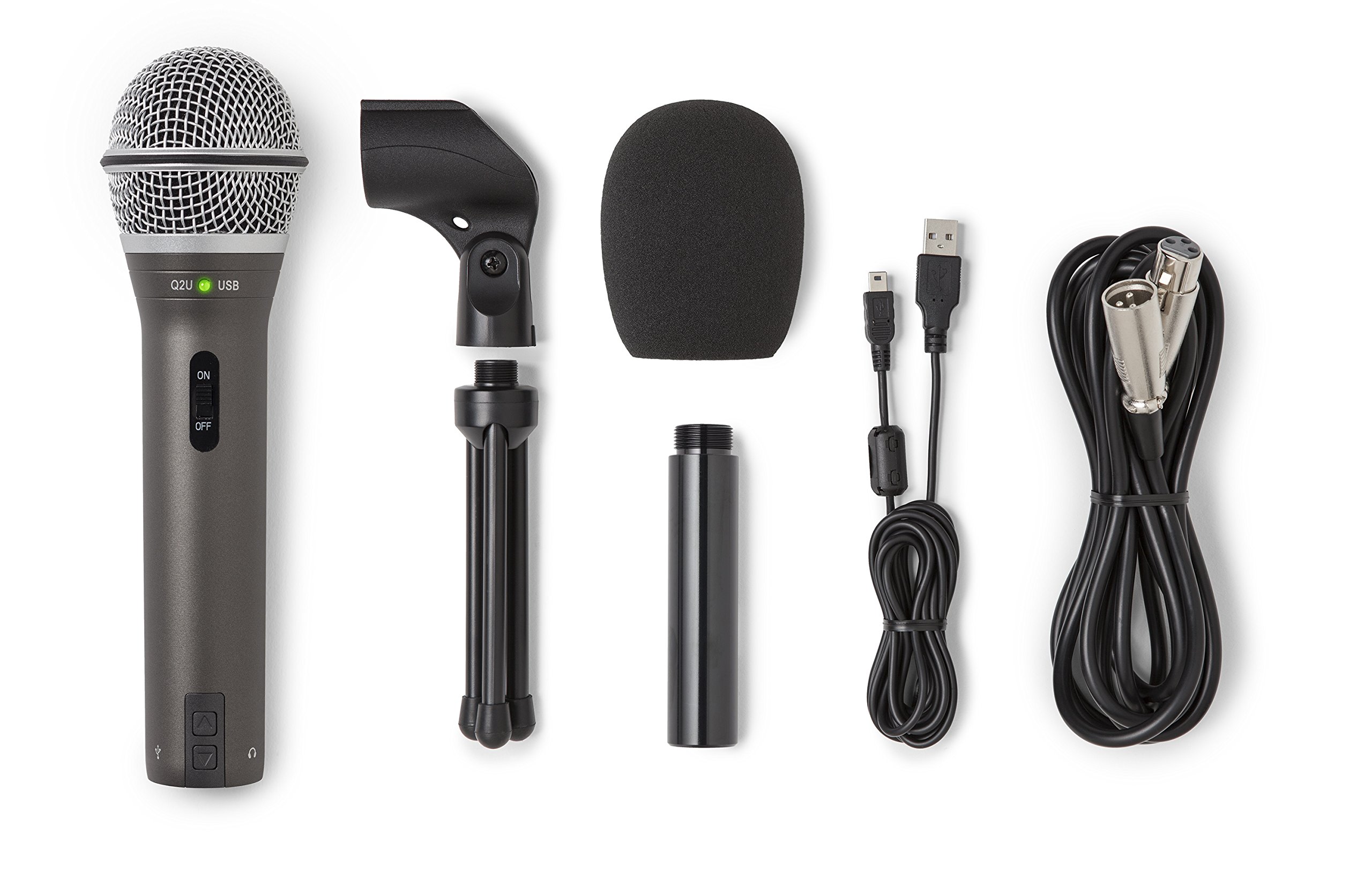
- Switch between USB-C computer connection and XLR gear.
- Use the included tripod desktop stand and extension.
- A windscreen, mic clip, and both cables come in the pack.
Best For: Podcasters who want a handheld dynamic mic with both computer and interface connections.

MAONO PD400X Dynamic Microphone
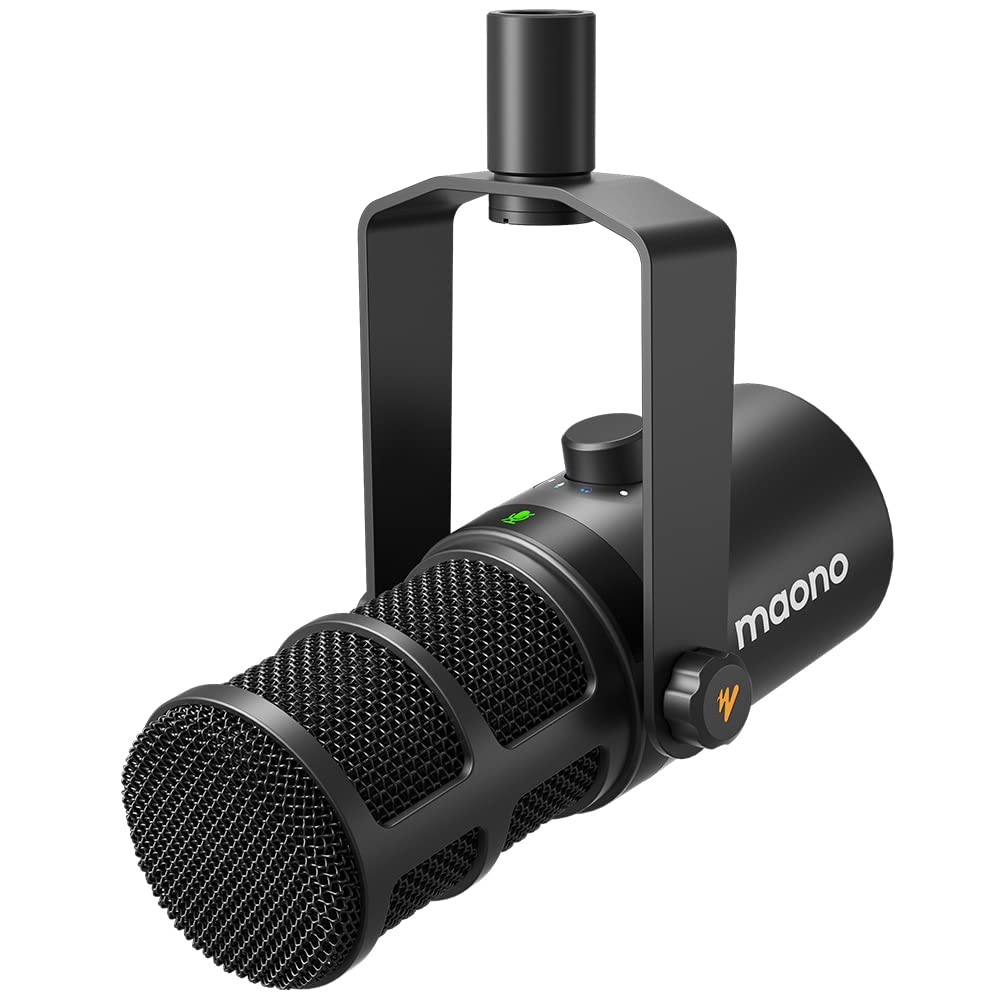
- Connect over USB or XLR.
- Adjust EQ, limiter, and compressor in Advanced Mode.
- Mute by touch and see the LED status indicator.
Best For: Podcasters who want USB convenience, XLR connectivity, and software tone adjustments.
MAONO PD300X Dynamic Microphone
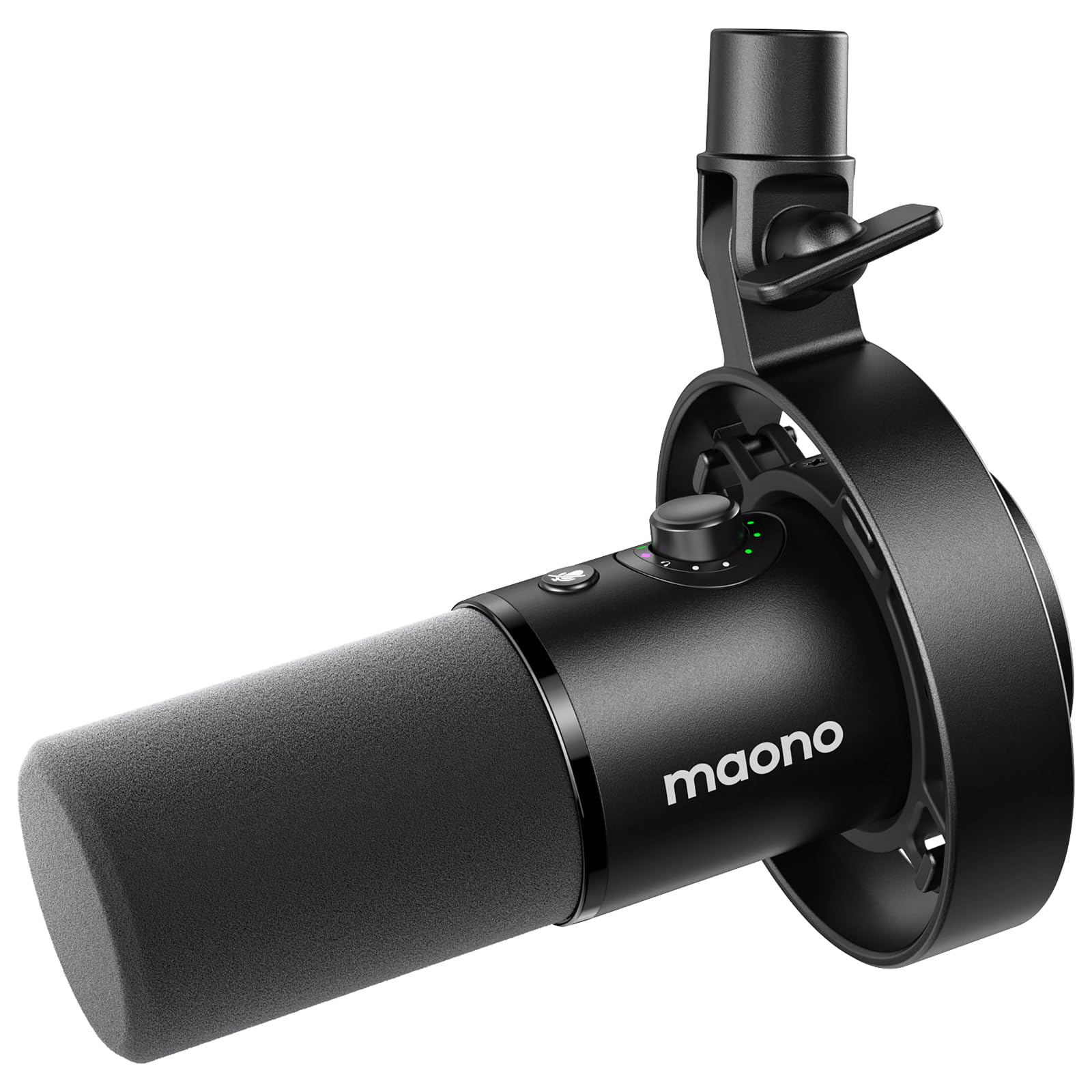
- Offers USB and XLR connections for computer or console workflows.
- Includes four preset modes and app-based sound adjustments.
- A combined knob handles gain, headphone volume, and monitoring.
Best For: Podcasters who want USB/XLR connections with preset sound modes and software processing.
FIFINE AmpliTank K688 Dynamic Microphone
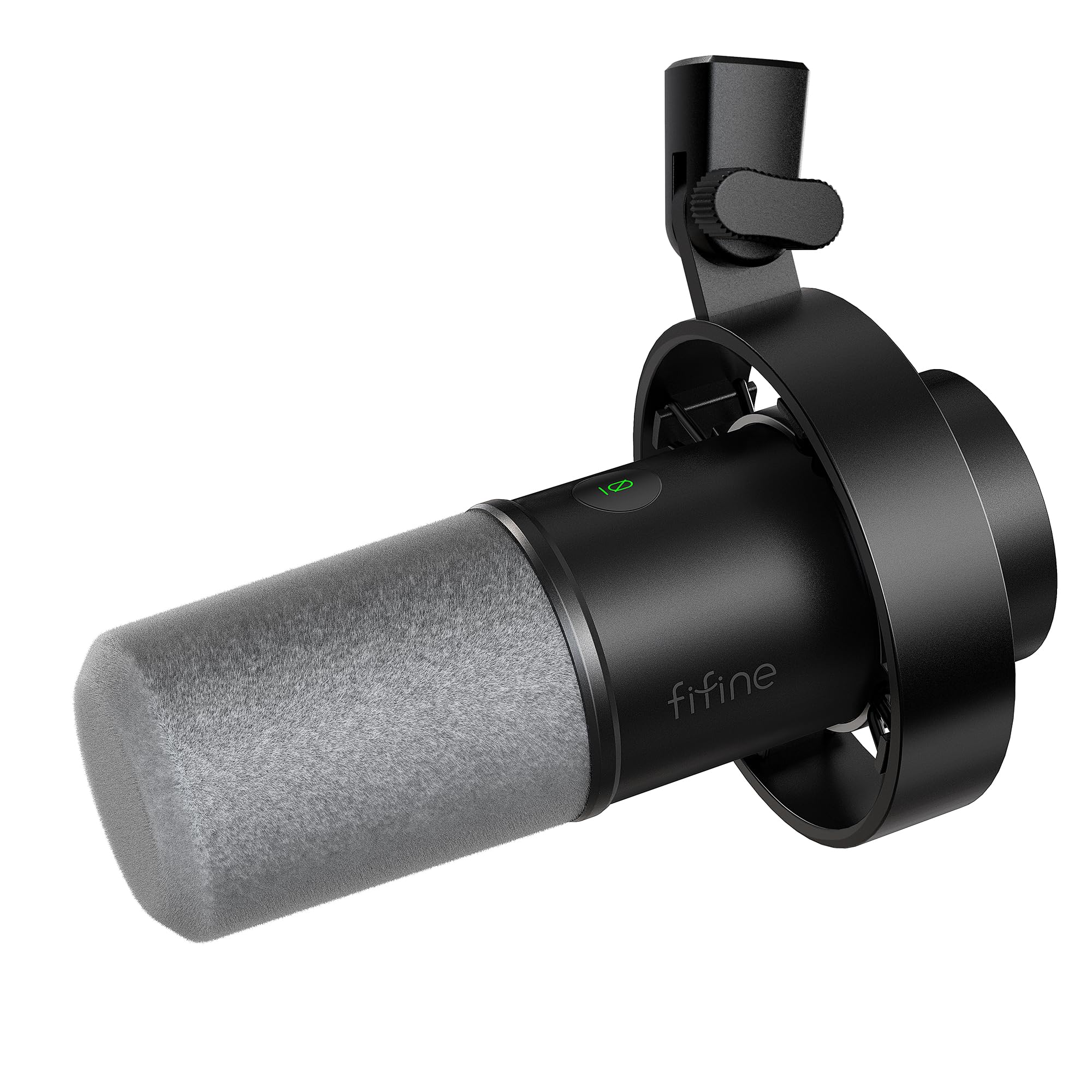
- Use USB for direct computer recording or XLR with compatible gear.
- Control gain, mute, and headphone monitoring over USB.
- A shock mount and windscreen are included; stands and XLR cable are not.
Best For: Podcasters who record close to the mic and want USB controls plus an XLR upgrade route.
FIFINE AmpliTank K688P Dynamic Microphone
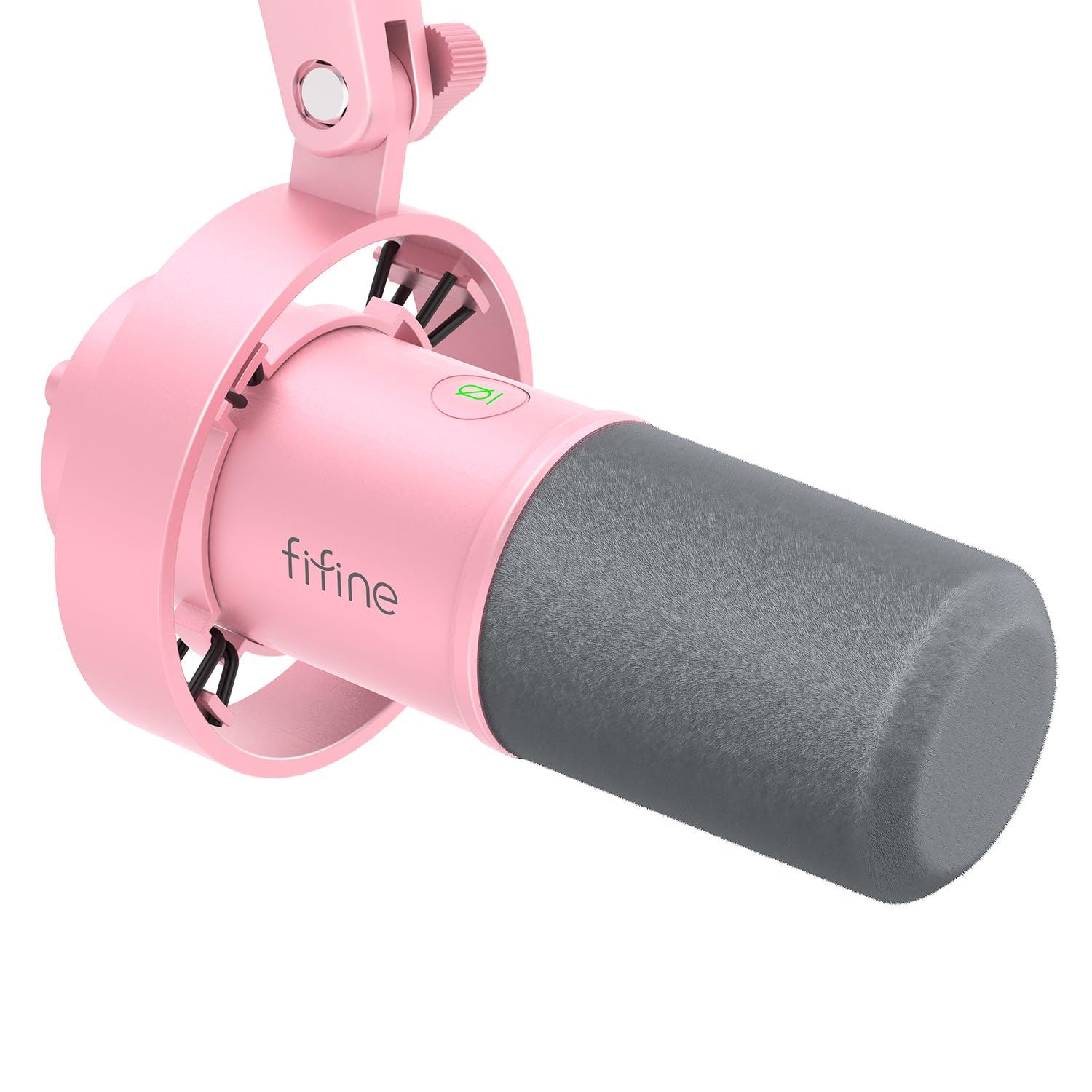
- Connect by USB or XLR, depending on the recording chain.
- Use the mute and volume controls with headphone monitoring over USB.
- Shock mount, USB cable, and thread adapter are included.
Best For: Podcasters who want a pink dynamic mic with USB controls and XLR connectivity.
FIFINE AmpliTank K688W Dynamic Microphone
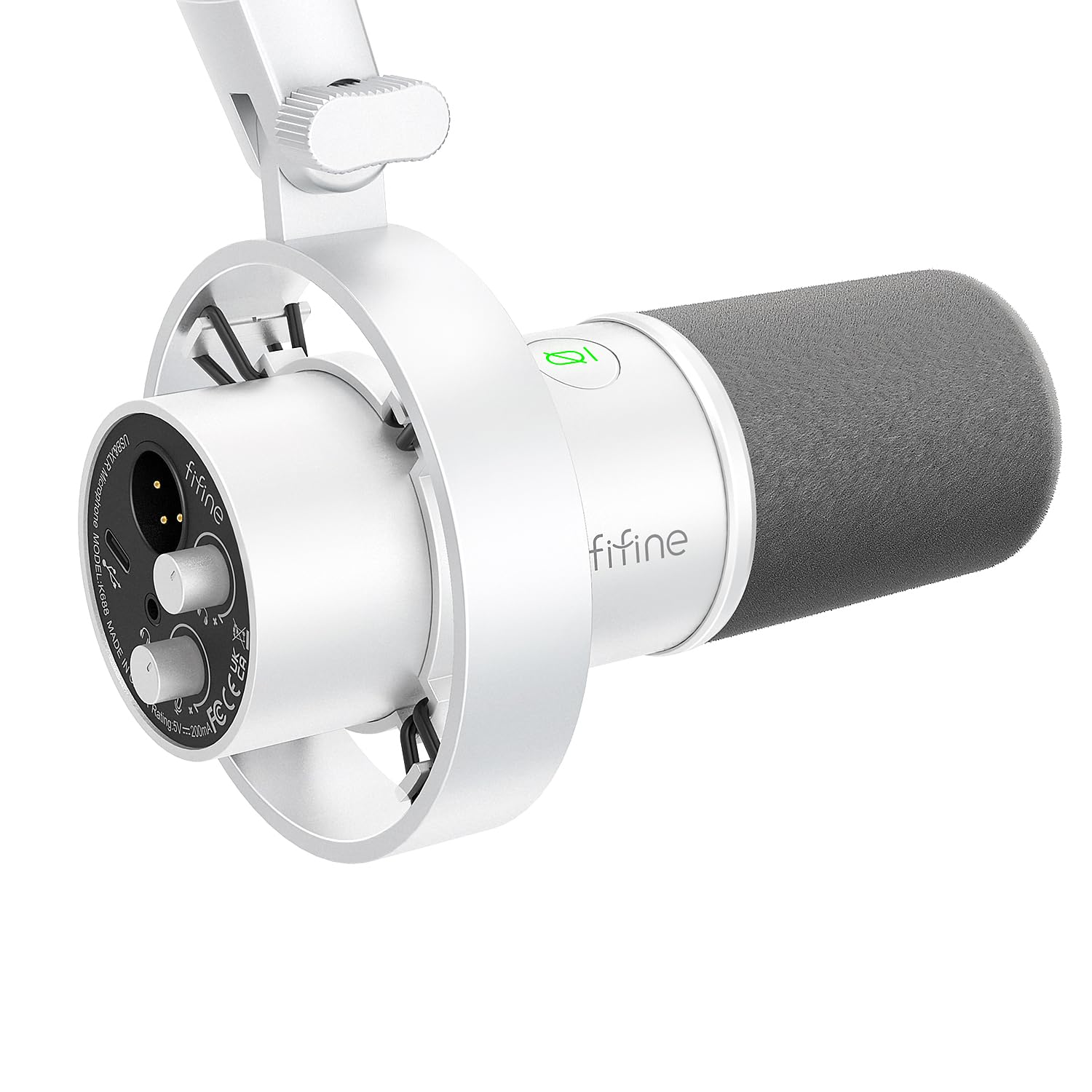
- USB and XLR connections offer a direct computer route and an analog option.
- USB controls include mute and headphone monitoring.
- The package includes a shock mount, USB cable, and thread adapter.
Best For: Podcasters who want a white dynamic microphone with mute, gain, and headphone monitoring.
MAONO DM40 Wireless Microphone
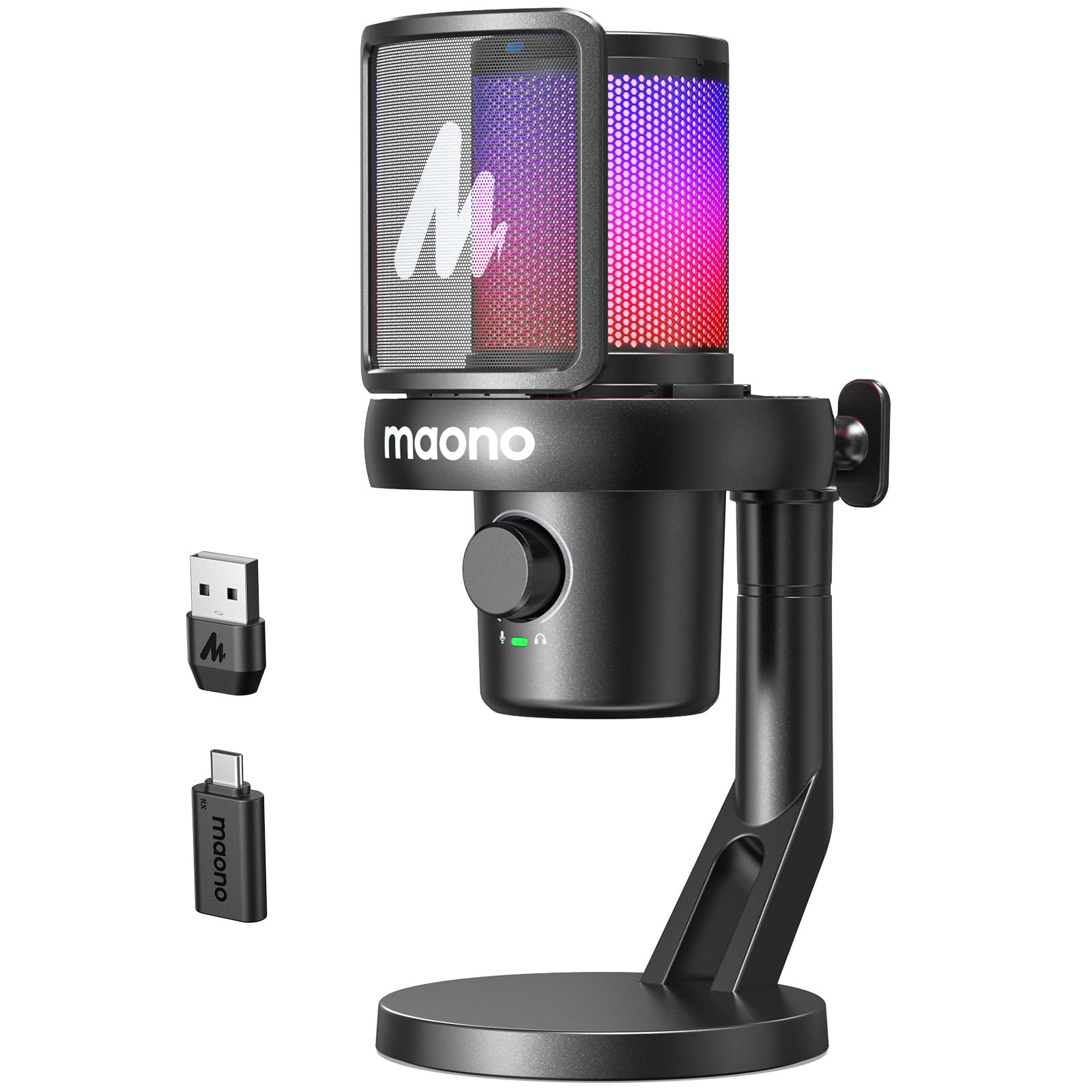
- Choose wired or wireless use with the USB-C cable and dongle.
- Select from three levels of noise cancellation.
- Up to 40 hours of continuous use is specified.
Best For: Podcasters who value a wireless desktop setup and app-based controls.
MAONO PD100 XLR Podcast Microphone
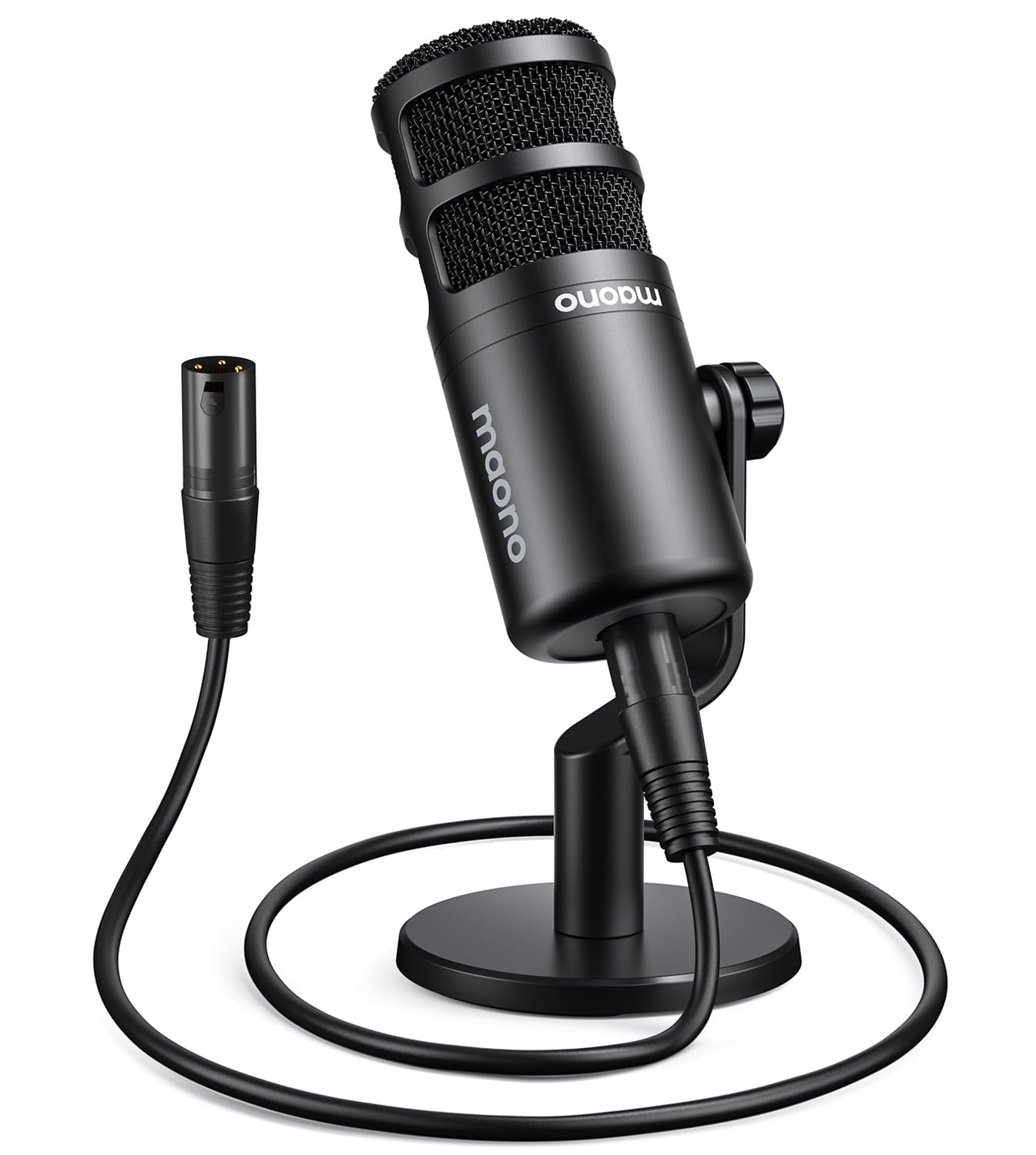
- Requires an XLR interface or mixer for connection.
- Includes a desktop stand, rod extender, round base, and cable.
- Its inner double-layer pop filter attenuates plosives.
Best For: Podcasters who already have an audio interface or mixer and want a desktop stand in the box.
SteelSeries Alias USB Mic
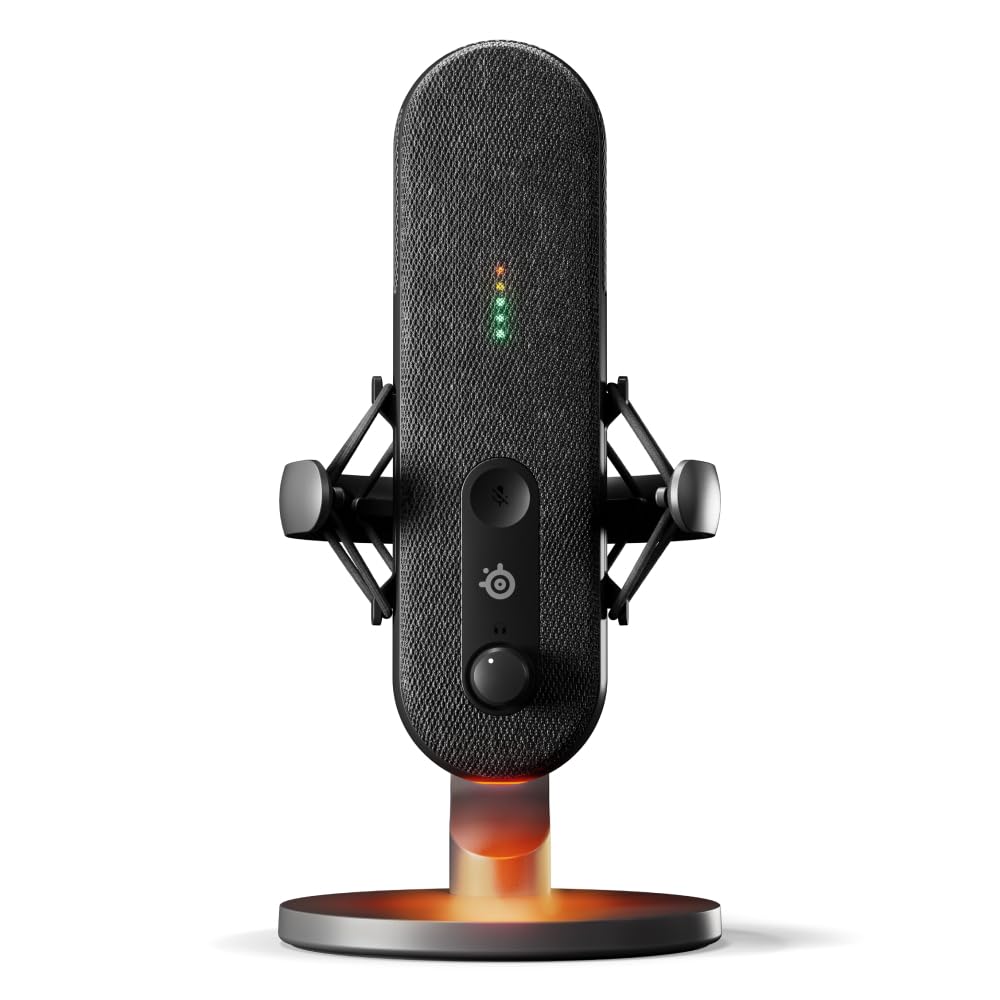
- Sonar software includes mixing, app routing, and AI noise cancellation.
- LED lighting indicates audio levels and mute status.
- An integrated shock mount and desktop stand are included.
Best For: Podcasters who want a USB microphone with software mixing and visible level and mute feedback.
SteelSeries Alias Pro Kit
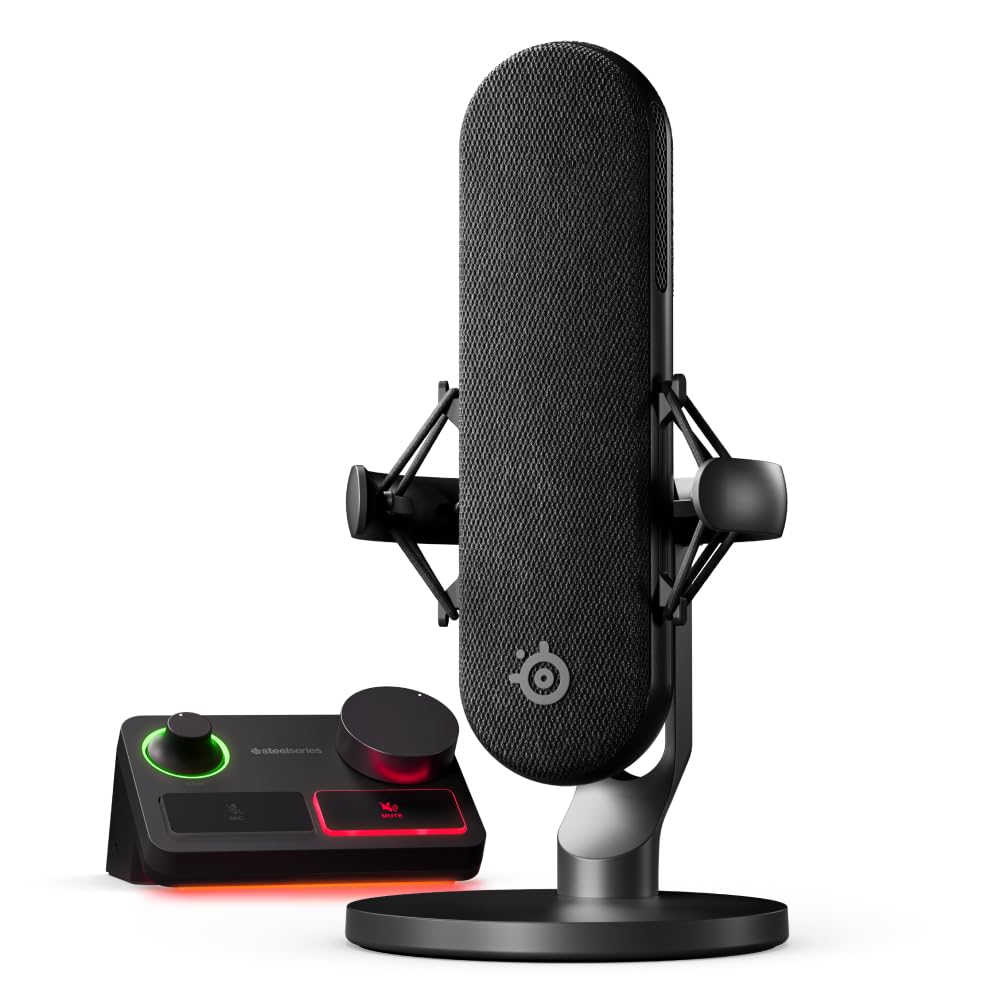
- The kit includes an XLR microphone and stream mixer.
- USB-C supports a one-PC or two-PC setup.
- Sonar software offers mixing and app routing.
Best For: Podcasters and streamers who want an XLR mic and dedicated mixer for one or two PCs.
USB and XLR Flexibility
Samson Q2U Dynamic USB-C/XLR Microphone
The Samson Q2U is a dynamic handheld microphone with USB-C and XLR connections, giving it a straightforward route to a computer and a path to an audio interface or mixer. Its included tripod desktop stand and extension make it usable on a desk without a separate arm, while the mic clip and windscreen cover basic positioning and vocal setup.
USB-C connects directly to compatible computers, and the supplied XLR cable supports analog connections. The record does not specify onboard gain controls or headphone monitoring, so check whether those functions matter for your workflow before choosing it.
Best For: Podcasters who want a handheld dynamic mic with both computer and interface connections.
| Pros | Cons |
|---|---|
|
|
Choose the Q2U if you want a simple desktop starting point with an included XLR cable for a later interface or mixer setup. Its handheld format and tripod stand take little setup compared with a boom arm kit, though they offer less reach and positioning flexibility.
Confirm that the computer has a compatible USB-C interface and decide whether you need monitoring or level controls, since those details are not specified.
Software Tone and Room Controls
MAONO Dynamic Microphone, USB/XLR Podcast PC Microphone with Software, EQ,Tap-to-Mute, Headphone Jack, Gain Knob & Volume Control, Studio Mic for Broadcast, Recording, Streaming & Gaming (PD400X)
The MAONO PD400X combines a dynamic capsule and cardioid pattern with USB and XLR outputs. USB is plug-and-play, and the MAONO Link app adds Standard and Advanced modes for vocal tone, distance, gain, monitor mix, EQ, limiter, and compressor adjustments.
A three-in-one knob handles mic gain, headphone volume, and monitor mix, while a touch mute key has an LED indicator. The app controls and onboard adjustments make it suited to podcasters who like shaping their sound.
The record does not identify an included stand or cable package, so check what mounting and connection accessories your setup needs.
Best For: Podcasters who want USB convenience, XLR connectivity, and software tone adjustments.
| Pros | Cons |
|---|---|
|
|
Choose the PD400X if you want to adjust vocal tone and processing in software while keeping an XLR option available. It offers more documented sound-shaping controls than the simpler USB/XLR models, but you may need to source a stand or cable separately.
Check the app workflow and whether you prefer desktop knobs or software changes before buying; all documented outputs and controls make it a flexible desk or studio choice.
Preset Modes and Noise Controls
MAONO Dynamic Microphone-XLR USB Podcast Recording Mic: for Vocal Recording, Content Creation, Home Studio, Voiceover, with 192kHz/24bit, Noise Reduction, Mic Gain, Monitoring, Mute (PD300X)
The MAONO PD300X is a dynamic USB/XLR microphone with a stated 192kHz/24bit sampling rate and four preset modes. Its MAONO Link software includes a visual EQ panel, limiters, compressors, and high-pass filters, and the notes describe a five-level noise reduction system.
A smart knob combines microphone gain, headphone volume, and monitoring, while the mute button provides quick interruption control. USB supports plug-in recording, and XLR connects to mixing consoles or other equipment.
The included stand and cable details are not specified, so check the package and mounting requirements before planning a desk setup.
Best For: Podcasters who want USB/XLR connections with preset sound modes and software processing.
| Pros | Cons |
|---|---|
|
|
Choose the PD300X if preset switching and software processing are central to your podcast workflow. Its listed controls and noise reduction features offer more adjustment options than a basic plug-and-play microphone, but the details do not establish what mounting accessories come in the box.
Confirm that package before choosing a stand or arm, and check that your recording software and preferred XLR or USB chain fit the intended setup.
Dynamic Mic with Close-Recording Focus
FIFINE Dynamic Microphone, XLR/USB Podcast Recording PC Microphone for Vocal Voice-Over Streaming, Studio Metal Mic with Mute, Headphone Jack, Monitoring Volume Control, Windscreen-Amplitank K688
The FIFINE AmpliTank K688 is a metal dynamic microphone with USB and XLR connections, cardioid pickup, and a stated 130dB SPL. For USB recording it offers tap-to-mute, a gain knob, a headphone jack, and monitoring volume control.
A windscreen helps reduce plosive harshness, and the included shock mount is intended to reduce desk and mechanical vibration. The notes recommend close microphone use and identify an 8.2ft USB cable, but an XLR cable, boom arm, and mic stand are not included.
It fits podcasters prepared to supply their preferred mount or recording interface.
Best For: Podcasters who record close to the mic and want USB controls plus an XLR upgrade route.
| Pros | Cons |
|---|---|
|
|
Choose this K688 if close mic technique suits your recording and you want both direct USB controls and an XLR option. It includes the shock mount and USB cable, yet you must provide a stand or arm, and a separate XLR cable for analog use.
Unlike the K688 bundle with an arm, this configuration leaves the mounting choice to you. Check the available desk space and connection gear before buying.
USB/XLR Dynamic Mic in Pink
FIFINE XLR/USB Dynamic Microphone, Studio XLR Vocal Podcast Microphone for Recording, USB Streaming Mic with Mute Button, Gain Knob, Headphones Monitoring for Voice-Over, Video-Amplitank K688 Pink
This pink FIFINE AmpliTank K688 uses a dynamic capsule, cardioid pattern, and a stated 130dB SPL. It supports USB and XLR, with mute, volume, and headphone monitoring functions available over USB.
An external shock mount helps isolate desk vibration, and the windscreen is intended to reduce harsh plosive sounds during close vocal recording. The included package has an 8.2ft USB cable and a thread adapter, but no XLR cable, boom arm, or microphone stand.
It is a match for a podcast desk where you already have mounting gear or plan to choose it separately.
Best For: Podcasters who want a pink dynamic mic with USB controls and XLR connectivity.
| Pros | Cons |
|---|---|
|
|
Choose the pink K688 if you want a dynamic USB/XLR microphone and already have a stand or arm that fits its mount. The USB connection enables the onboard controls and monitoring, while the package also includes a shock mount, USB cable, and thread adapter.
XLR connection requires separate cable and interface or mixer gear, and the mic controls do not carry over to XLR. Compare the color and included mounting pieces with the black K688 offer before deciding.
White USB/XLR Podcast Mic
FIFINE Studio XLR Dynamic Microphone, USB PC Podcast Microphone for Streaming Recording, XLR/USB Vocal Mic with Tap-to-Mute, Gain Knob, Headphones Monitoring-Amplitank K688 White
The white K688W is a dynamic microphone for vocal podcast recording with USB and XLR interfaces, a cardioid pattern, and a stated 130dB SPL. Its USB functions include mute, a volume button, a headphone jack, and monitoring-level adjustment.
The included shock mount and windscreen address desk vibration and plosive sounds, while an 8.2ft USB cable and thread adapter support a computer connection and mounting fit. The notes do not include an XLR cable, boom arm, or microphone stand.
This makes it practical for buyers choosing their own mount and wanting a white color option for a home recording setup.
Best For: Podcasters who want a white dynamic microphone with mute, gain, and headphone monitoring.
| Pros | Cons |
|---|---|
|
|
Choose this version if the white finish fits your workspace and you want the K688's USB controls with the option to move to XLR gear. It includes a shock mount and thread adapter, but you will need to supply the stand or arm and any XLR cable.
The package and functions closely match the pink K688 variant, so the meaningful difference in these records is the selected color. Confirm your mounting hardware before ordering.
Wireless Desktop Recording
MAONO Wireless Microphone for PC,Gaming Streaming Condenser Mic with Software AI Voice Change,3-Level Noise Cancellation,Custom EQ,Gain Control USB Mic for Podcast Recording (DM40-Black)
The MAONO DM40 is a wireless USB microphone aimed at recording, streaming, and podcast use. Its notes give up to 40 hours of continuous use and describe a two-in-one USB-C cable plus wireless USB-C dongle, with wired and wireless switching.
The microphone offers three noise cancellation levels, scene presets, EQ, gain and volume controls, mute, monitoring, and RGB lighting through its controls and Maono Link software. The record does not identify a stand package or the exact wireless operating range.
It suits a flexible desk or occasional mobile setup, provided you verify the connection and mounting details you need.
Best For: Podcasters who value a wireless desktop setup and app-based controls.
| Pros | Cons |
|---|---|
|
|
Choose the DM40 if a cable-free desktop setup is more useful to you than an XLR upgrade path. It combines up to 40 hours of stated battery use with software controls and wired fallback, which separates it from the USB/XLR dynamic picks.
The notes do not specify wireless range or the included stand, so check those two points against your recording position and desk setup. Its feature set also suits creators who want scene presets and voice effects.
XLR Desk Mic with Stand Included
MAONO PD100 XLR Podcast Microphone, Cardioid Studio Dynamic Metal Desk Mic | Compatible with Audio Interface, Audio Mixer, Sound Card for Vocal Recording, Streaming, Voiceover, Music, Content Creation
The MAONO PD100 is a dynamic XLR microphone with a cardioid pattern, metal body, and desktop stand. It includes a rod extender, heavy round metal base, and 6.56ft XLR cable, so the package has a complete desk-mounted connection path when paired with an audio interface or mixer.
The mic uses a top-facing pickup orientation and has an inner double-layer pop filter to attenuate plosives. It does not offer USB connectivity in the supplied details, so it is best suited to podcasters who already use XLR recording gear rather than those seeking a direct computer plug-in microphone.
Best For: Podcasters who already have an audio interface or mixer and want a desktop stand in the box.
| Pros | Cons |
|---|---|
|
|
Choose the PD100 if your podcast setup already has an interface or mixer and you want an included desktop stand and XLR cable. It offers a compact desk approach compared with arm-mounted models, though its top-facing pickup orientation affects how you position it while speaking.
It is not the fit for direct USB recording based on the connection details here. Check your interface input and how the base and mic height work with your desk.
USB Mic with Software and LED Metering
SteelSeries Alias USB Mic for PC — 3x Bigger Capsule for Gaming, Streaming and Podcasting — Sonar for Streamers Audio Software — AI Noise Cancelling — LED Mute & Level Monitoring — Shock Mount
The SteelSeries Alias is a USB microphone for gaming, broadcasting, and podcasting, with a cardioid pattern and capsule described as up to three times bigger than other mics. Its Sonar software includes mixing, app routing, and AI noise cancellation.
Green-to-red LED lighting shows audio levels and mute status directly on the microphone, while a customizable RGB light adds desk lighting. An integrated shock mount reduces unwanted vibration, and the package includes a desktop stand.
It is a software-focused USB option; the supplied details do not identify an XLR connection, so consider it when computer-based recording is your intended workflow.
Best For: Podcasters who want a USB microphone with software mixing and visible level and mute feedback.
| Pros | Cons |
|---|---|
|
|
Choose the Alias if your podcast is computer-centered and visible level and mute feedback would help manage recording. Its included desktop stand, shock mount, and Sonar software provide a cohesive setup without requiring an XLR interface.
The record does not identify XLR connectivity, and a boom arm is separate, so verify the connection route and preferred mounting style before buying. This package favors software controls and on-mic status over a documented dual-output path.
Mixer Kit for Dual-PC Recording
SteelSeries Alias Pro Kit — XLR Mic + Stream Mixer — 3x Bigger Capsule for Gaming, Streaming and Podcasting — USB/XLR Interface — Free Sonar Audio Software — Custom Controls — RGB — Single or Dual PC
The SteelSeries Alias Pro Kit pairs an XLR microphone with an XLR stream mixer and USB-C connection for one or two PCs. Its cardioid mic has a capsule described as up to three times bigger than other mics, and an integrated shock mount is compatible with the included desktop stand.
The mixer has customizable controls and RGB lighting for monitoring audio levels, while Sonar software adds mixing, app routing, and AI noise cancellation. This is the most involved option here, aimed at a recording or streaming setup that benefits from a dedicated mixer rather than a minimal USB desk connection.
Best For: Podcasters and streamers who want an XLR mic and dedicated mixer for one or two PCs.
| Pros | Cons |
|---|---|
|
|
Choose the Alias Pro Kit if your podcast doubles as a stream and you want a mixer between the microphone and computer. The one-or-two-PC connection and customizable mixer controls offer a more involved control surface than a USB mic, but they add setup complexity and the boom arm is a separate purchase.
Confirm the included cable and how the mixer connects to your computers before buying. For a single-computer desk workflow, the USB Alias is simpler.
How to Choose Microphones For Podcasting
How We Picked Microphones for Podcasting
These picks cover the choices that shape a podcast desk: USB for direct computer recording, XLR for an interface or mixer, and models with both connections for a setup that may change. The selection also favors clear use cases, such as a handheld mic with a tripod, a boom-arm kit, a dynamic mic with onboard monitoring, or software-focused controls.
Included accessories matter because some options arrive with a stand, cable, or shock mount while others leave mounting gear to the buyer. I also considered whether controls such as mute, gain, headphone monitoring, and noise processing are documented, then kept duplicate model offers and general-purpose desk microphones out of the main picks.
Comparing Podcast Microphones by Connection and Controls
USB models connect directly to a computer and suit a compact home podcast setup. The Samson Q2U and FIFINE K688 variants add XLR, so they can also work with an interface or mixer; the MAONO PD100 is XLR-only and includes a desktop base and cable.
The SteelSeries Alias is a USB-focused software package, while the Alias Pro Kit adds a dedicated mixer and support for one or two computers.
Controls differ as much as connections. The PD400X and PD300X provide app-based EQ and processing options, while the FIFINE K688 models put mute, gain, and monitoring functions on the mic in USB mode.
Check whether those controls remain available over your intended connection; for the K688 variants, the function keys are USB-only.
| Product | Standout features | Best for |
|---|---|---|
| Samson Q2U Dynamic USB-C/XLR MicrophoneCheck Price |
| Podcasters who want a handheld dynamic mic with both computer and interface connections. |
| MAONO PD400X Dynamic MicrophoneCheck Price |
| Podcasters who want USB convenience, XLR connectivity, and software tone adjustments. |
| MAONO PD300X Dynamic MicrophoneCheck Price |
| Podcasters who want USB/XLR connections with preset sound modes and software processing. |
| FIFINE AmpliTank K688 Dynamic MicrophoneCheck Price |
| Podcasters who record close to the mic and want USB controls plus an XLR upgrade route. |
| FIFINE AmpliTank K688P Dynamic MicrophoneCheck Price |
| Podcasters who want a pink dynamic mic with USB controls and XLR connectivity. |
| FIFINE AmpliTank K688W Dynamic MicrophoneCheck Price |
| Podcasters who want a white dynamic microphone with mute, gain, and headphone monitoring. |
| MAONO DM40 Wireless MicrophoneCheck Price |
| Podcasters who value a wireless desktop setup and app-based controls. |
| MAONO PD100 XLR Podcast MicrophoneCheck Price |
| Podcasters who already have an audio interface or mixer and want a desktop stand in the box. |
| SteelSeries Alias USB MicCheck Price |
| Podcasters who want a USB microphone with software mixing and visible level and mute feedback. |
| SteelSeries Alias Pro KitCheck Price |
| Podcasters and streamers who want an XLR mic and dedicated mixer for one or two PCs. |
Choosing a Podcast Mic for Your Room and Desk
A dynamic, cardioid microphone can suit close vocal recording, especially when you want the mic aimed toward your voice. The FIFINE K688 notes specify close use, and the MAONO PD100 uses a top-facing pickup orientation.
Confirm that your stand or arm can position the microphone comfortably and that the mic will not block your workspace.
A desktop stand keeps the setup simple, as with the Q2U and PD100. An arm can bring the mic closer and move it aside between sessions, but several microphones here do not include an arm.
Check package contents before choosing a mount, and look for thread adapters or desk clamp fit where those details are provided.
What to Check Before Recording a Podcast
Decide whether you need direct USB recording, XLR connections, or both. XLR mics require compatible interface or mixer gear, and some packages leave out the XLR cable.
USB can simplify a computer setup, but features such as software processing and monitoring depend on the specific model and connection mode.
Consider how you will monitor and manage interruptions. A headphone jack and level control can help you hear the signal while recording, while a mute button offers quick control during a session.
App-based EQ and noise settings add choices, but a simpler knob-and-button layout may be easier if you want to make changes without opening software.
Who Should Buy Which Podcast Microphone
Choose the Samson Q2U for a handheld USB-C/XLR path with a basic desktop stand and cables. The PD100 fits a buyer who already has an interface or mixer and wants an XLR desk mic with a stand and cable included.
For a computer-first setup with prominent software features, compare the MAONO PD400X or PD300X; for a dedicated mixer and dual-PC workflow, the SteelSeries Alias Pro Kit is the specialized option.
For close vocal recording with your own mount, the FIFINE K688 variants include USB controls, a shock mount, and a USB cable, with color options across the supplied records. If wireless flexibility is the priority, the MAONO DM40 adds wired and wireless modes, app controls, and up to 40 hours of stated use.
Check the exact mount, cable, and connection requirements that fit your desk before choosing.