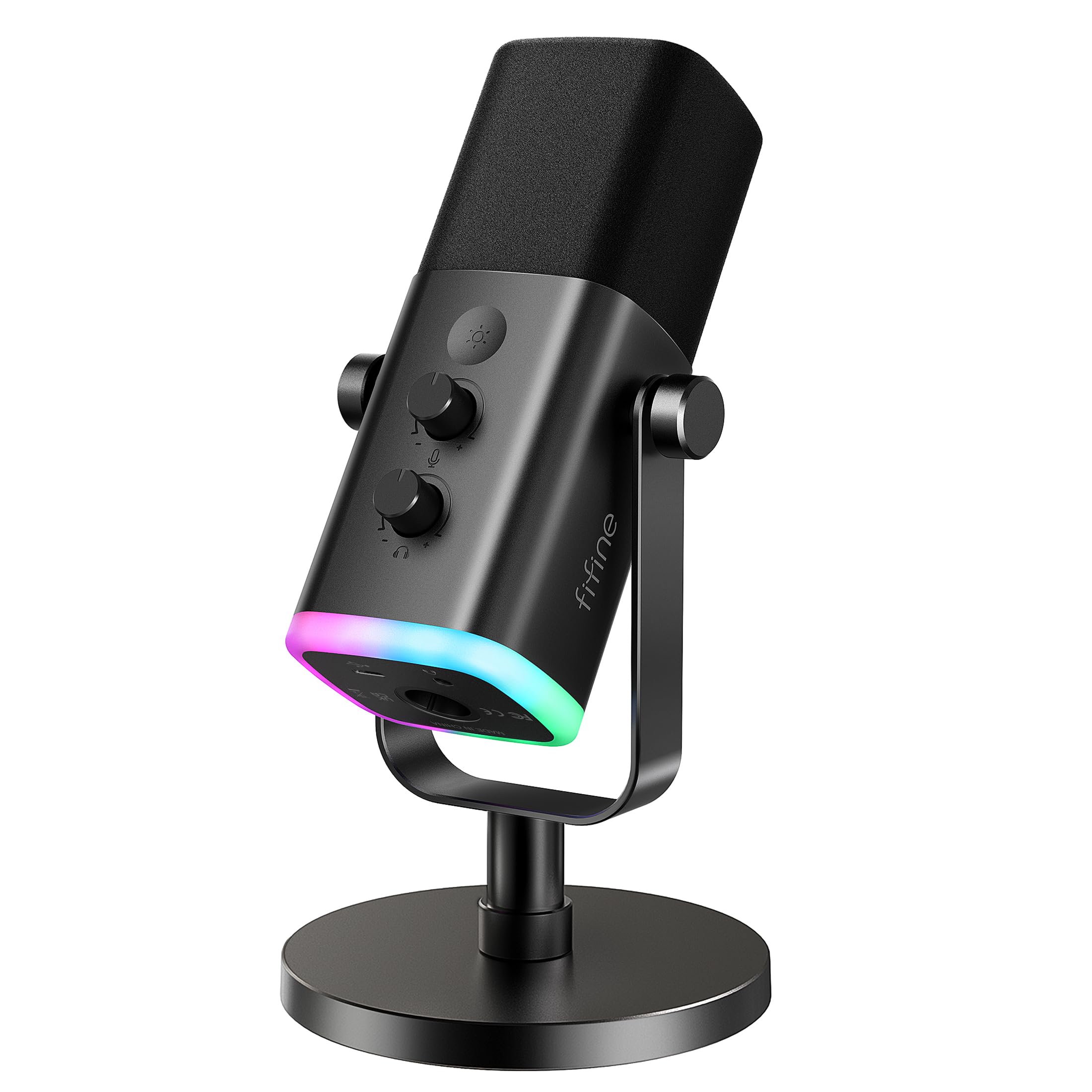
The FIFINE AmpliGame AM8 combines USB convenience with an XLR connection for creators who may want to expand their setup over time.
This fifine usb/xlr dynamic microphone for podcast recording review looks at its hands-on controls, voice-focused design, and the tradeoffs between its two connection modes.
FIFINE AM8 Review Summary
The quick verdict
12,000+ ratings
Read Amazon ReviewsFIFINE AmpliGame AM8
A practical fit for streamers and podcasters who want plug-and-play USB controls now and the option to move to an XLR interface later.
- USB and XLR outputs support direct computer use or connection to an audio interface or mixer.
- Cardioid dynamic pickup and a stated frequency response of 50 Hz to 16 kHz are aimed at vocal recording.
- The suggested speaking distance is about 2 to 6 inches, with the top of the end-address mic facing the sound source.
- USB mode includes tap-to-mute with an LED reminder, a gain knob, and headphone monitoring with volume control.

Pros
- Two connection types allow a simple USB start and a possible move to an interface or mixer.
- The mute control and LED reminder are convenient for live calls and streams.
Consider before buying
- An XLR cable is needed separately for interface or mixer use.
- RGB and the onboard function keys work only over USB, so XLR users give up those mic-side controls.
Read the full review summary
The AM8 is built around a straightforward creator workflow: connect over USB, adjust gain and headphone monitoring on the mic, and use the tap-to-mute control when needed.
Its cardioid dynamic design is intended to focus on sound in front of the mic, while the supplied guidance recommends speaking toward its top from about 2 to 6 inches away.
Its XLR output adds a path to an audio interface or mixer, but that connection requires a separate XLR cable and disables the RGB and onboard function keys.
The mic is best suited to desk-based streaming, podcasting, and vocal recording where USB convenience matters today and an interface-based setup may matter later.
The buying factors
FIFINE AM8 Scorecard
Editorial scores reflect listed features and buyer fit; they are not laboratory measurements or customer ratings.
Connection flexibility
USB and XLR support both a direct computer setup and a later interface or mixer connection.
USB controls
Tap-to-mute, a gain knob, headphone monitoring, and RGB controls give USB users useful adjustments on the mic.
Voice-focused design
The cardioid dynamic design and close speaking guidance suit an intentionally close-miked voice setup.
Setup simplicity
USB is described as plug and play, making it approachable for a first streaming or podcast mic.
Stand compatibility
Built-in 3/8-inch and 5/8-inch threads are intended to fit many mic stands without an adapter.
XLR workflow
XLR allows interface-based use, though the cable is separate and USB-specific controls are inactive in this mode.
Key Features and Specifications of FIFINE AM8
- USB and XLR outputs support direct computer use or connection to an audio interface or mixer.
- Cardioid dynamic pickup and a stated frequency response of 50 Hz to 16 kHz are aimed at vocal recording.
- The suggested speaking distance is about 2 to 6 inches, with the top of the end-address mic facing the sound source.
- USB mode includes tap-to-mute with an LED reminder, a gain knob, and headphone monitoring with volume control.
- USB mode also offers an RGB ring with three modes, more than ten color options, and a memory function.
- Built-in 3/8-inch and 5/8-inch metal threads support attachment to many mic stands; a windscreen cover is included.
Pros and Cons of FIFINE AM8
Pros
- Two connection types allow a simple USB start and a possible move to an interface or mixer.
- The mute control and LED reminder are convenient for live calls and streams.
- Gain and headphone monitoring controls are accessible on the mic in USB mode.
- Thread options add flexibility for desk stands and compatible mic stands.
Consider before buying
- An XLR cable is needed separately for interface or mixer use.
- RGB and the onboard function keys work only over USB, so XLR users give up those mic-side controls.
- The close suggested speaking range calls for deliberate mic placement at a desk.
Who Should Buy FIFINE AM8?
Good fit
Consider the AM8 if you want one microphone for a simple USB streaming or podcast setup, with the option to connect it to an interface later.
The USB mute, gain, and headphone controls can make routine adjustments easier without reaching for software.
It may also suit a compact home recording space where a close, front-facing speaking position is comfortable. Check that your preferred stand uses a compatible thread and that the mic can sit within the suggested 2-to-6-inch range.
Choose it with the connection modes in mind: USB retains the RGB and function keys, while XLR requires a separate cable and disables those controls.
That is a manageable tradeoff if your priority is USB convenience now or an interface-based voice setup later.
Who should skip it
Skip it if you need the mic's RGB, mute, and other onboard USB controls while connected through XLR; those functions are inactive in XLR mode.
Look for a different setup if you cannot keep a close speaking distance or do not want to source an XLR cable separately for interface use.
How the FIFINE AM8 Fits a Creator Setup
USB for a direct desk setup
The USB connection is the simplest route for a new creator: plug in, set the mic within the recommended speaking distance, and adjust gain or headphone monitoring at the microphone.
Tap-to-mute and its LED reminder are particularly useful in a stream or call where a quick silence control is practical.
XLR as a later step
XLR gives the AM8 a place in an interface or mixer-based setup, but it changes what the mic itself can do.
Because the RGB and function key are inactive over XLR, decide whether those controls are central to your routine before choosing that connection; also account for the separate cable.
Close placement and directional pickup
The cardioid pattern is designed to favor sound arriving from the front and reject off-axis noise.
The suggested 2-to-6-inch distance makes placement an important part of using the mic: position its top toward your voice, then check that the mic and stand fit your desk and speaking posture.
Stand and room considerations
The built-in 3/8-inch and 5/8-inch threads are intended to fit many stands without an adapter, which leaves room to choose a compatible desk or studio mount.
A windscreen cover is included, but the description does not specify a stand configuration beyond a desktop stand; check the supplied package details if a particular mounting arrangement matters.
Alternatives to FIFINE AM8
Multipurpose Dynamic Microphones alternative
5,000+ ratings
Read Amazon ReviewsSamson Q2U
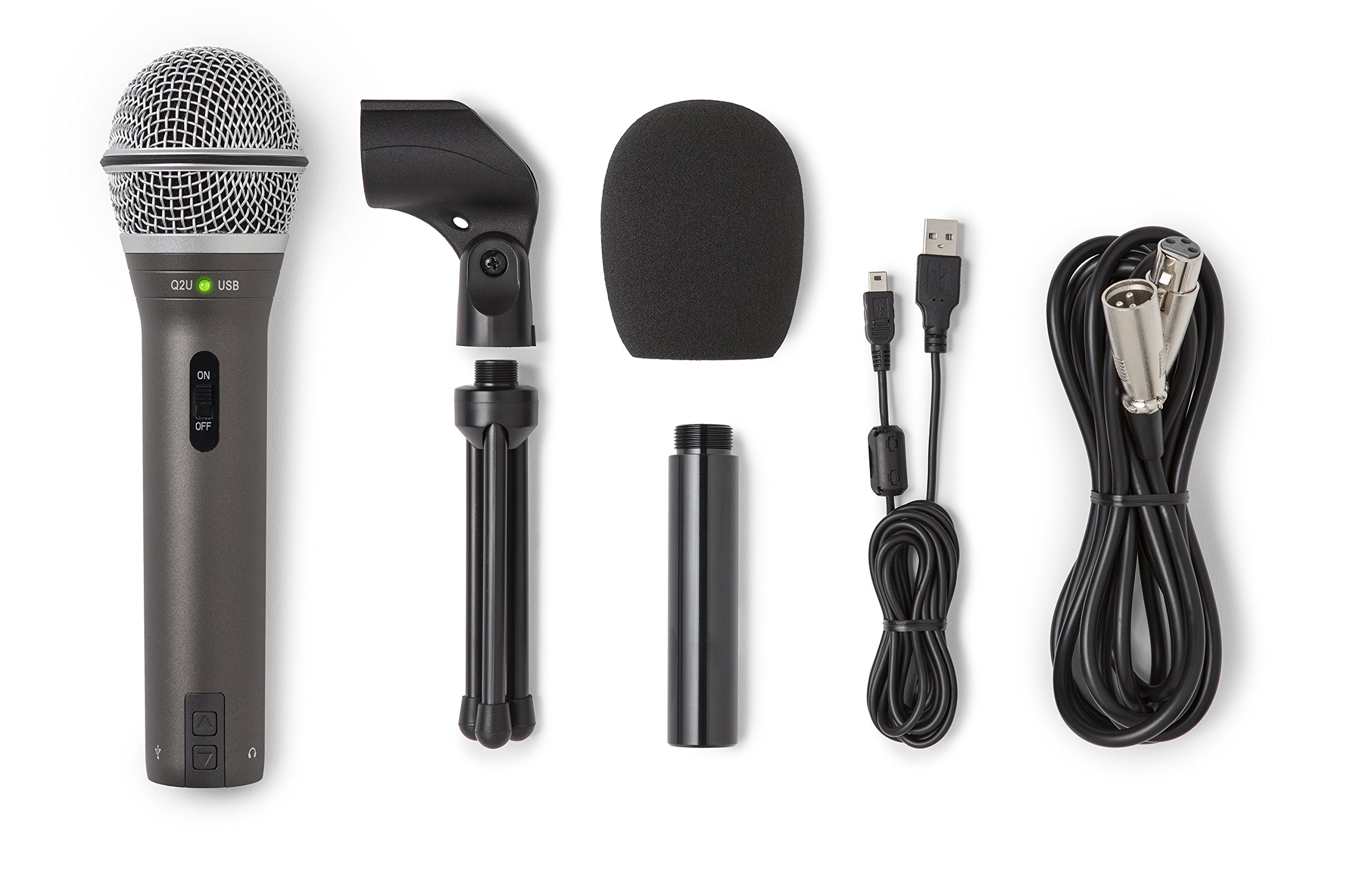
Consider the Q2U if an included XLR cable and a handheld form are more useful than the AM8's USB-only RGB and mic-side controls.
The AM8 may fit better if its listed USB controls and stand threads match your planned desk setup.
- The Samson Q2U is a handheld dynamic mic with USB-C and XLR plugs.
- Its described pack includes a tripod desktop stand, extension, mic clip, windscreen, USB-C cable, and XLR cable.
- The FIFINE AM8 offers USB and XLR, plus USB-only RGB, mute, gain, and headphone controls; its XLR cable is separate.
Multipurpose Dynamic Microphones alternative
600+ ratings
Read Amazon ReviewsSamson Q9U
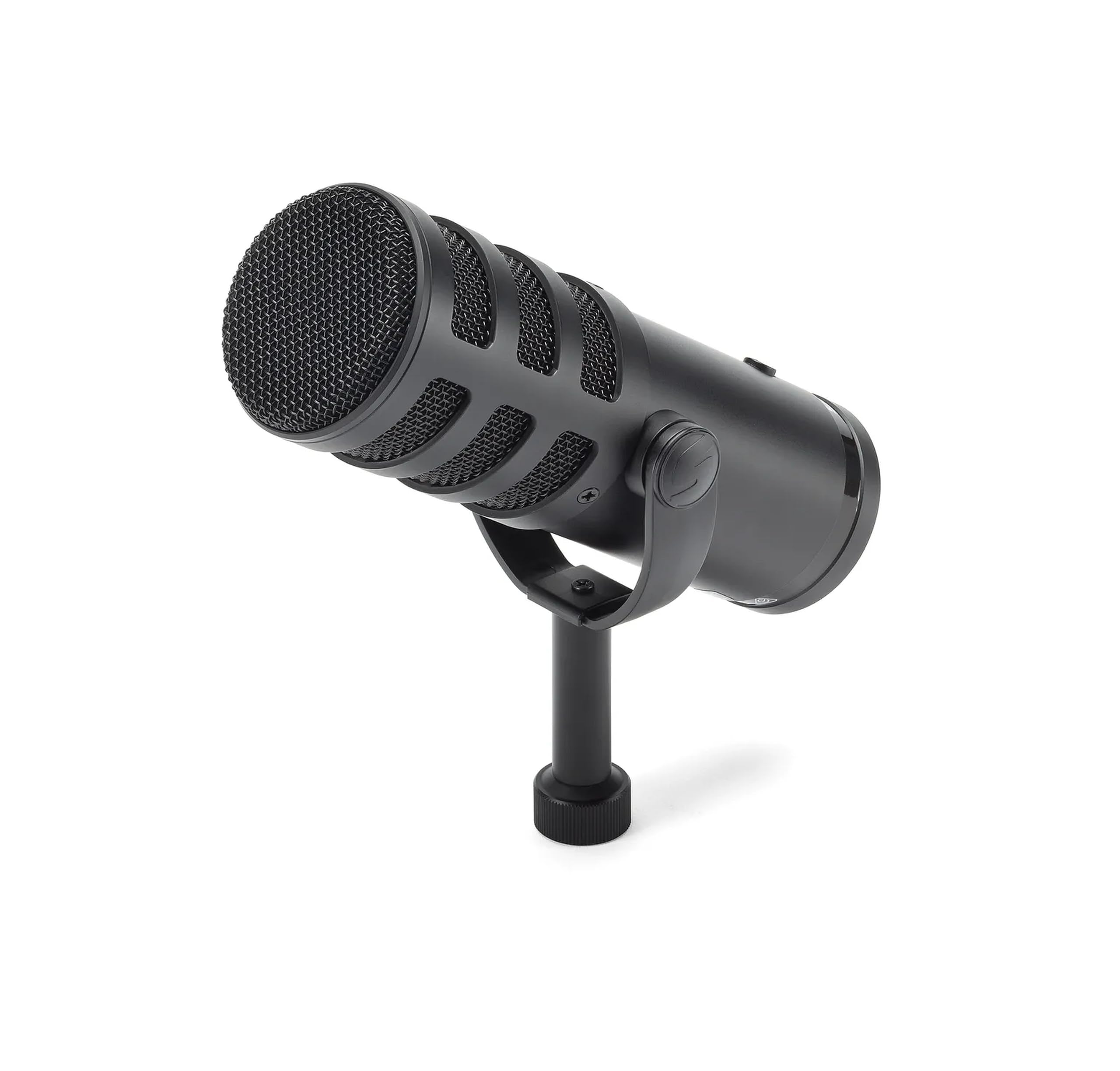
The Q9U is worth considering if you want an onboard mute and headphone monitoring across both connection types, along with specified high-definition USB recording.
The AM8 remains a fit for buyers drawn to its USB RGB controls and close desk-oriented setup.
- The Samson Q9U has USB-C and XLR outputs, zero-latency headphone monitoring, an onboard mute switch that works on both outputs, and a cardioid pattern.
- Its USB-C mode is described as supporting 24-bit/96 kHz recording.
- The FIFINE AM8 supports USB and XLR, with its onboard function keys available only in USB mode.
Is FIFINE AM8 Worth It?
The FIFINE AmpliGame AM8 is worth considering for a streamer or podcaster who wants an approachable USB microphone with useful on-mic controls and an XLR path for a future interface setup.
Its close speaking guidance, stand-thread options, and dual connection types make it adaptable to a small creator workflow.
Buy it if USB convenience is your priority and you are comfortable with the XLR cable requirement and the loss of USB-specific controls in XLR mode.
If you expect to rely on those controls while using an interface, compare models with controls that remain available across both connections.
Your review at a glance
12,000+ ratings
Read Amazon ReviewsFIFINE AmpliGame AM8
A practical fit for streamers and podcasters who want plug-and-play USB controls now and the option to move to an XLR interface later.
- USB and XLR outputs support direct computer use or connection to an audio interface or mixer.
- Cardioid dynamic pickup and a stated frequency response of 50 Hz to 16 kHz are aimed at vocal recording.
- The suggested speaking distance is about 2 to 6 inches, with the top of the end-address mic facing the sound source.
- USB mode includes tap-to-mute with an LED reminder, a gain knob, and headphone monitoring with volume control.